Reporter: Lee Ji-yoon Date: 2026.09.17

Source: “한국 손잡고 카자흐 금융허브 신도시 만들것”
Second-generation Koryo-saram Yuriy Tskhay, Chairman of Caspian Group
Leading the “hub city” project,
1.4 times the size of Seoul
“I want to turn Kazakhstan’s ‘Alatau New City’ into a financial hub of Central Asia by joining hands with Korea.”
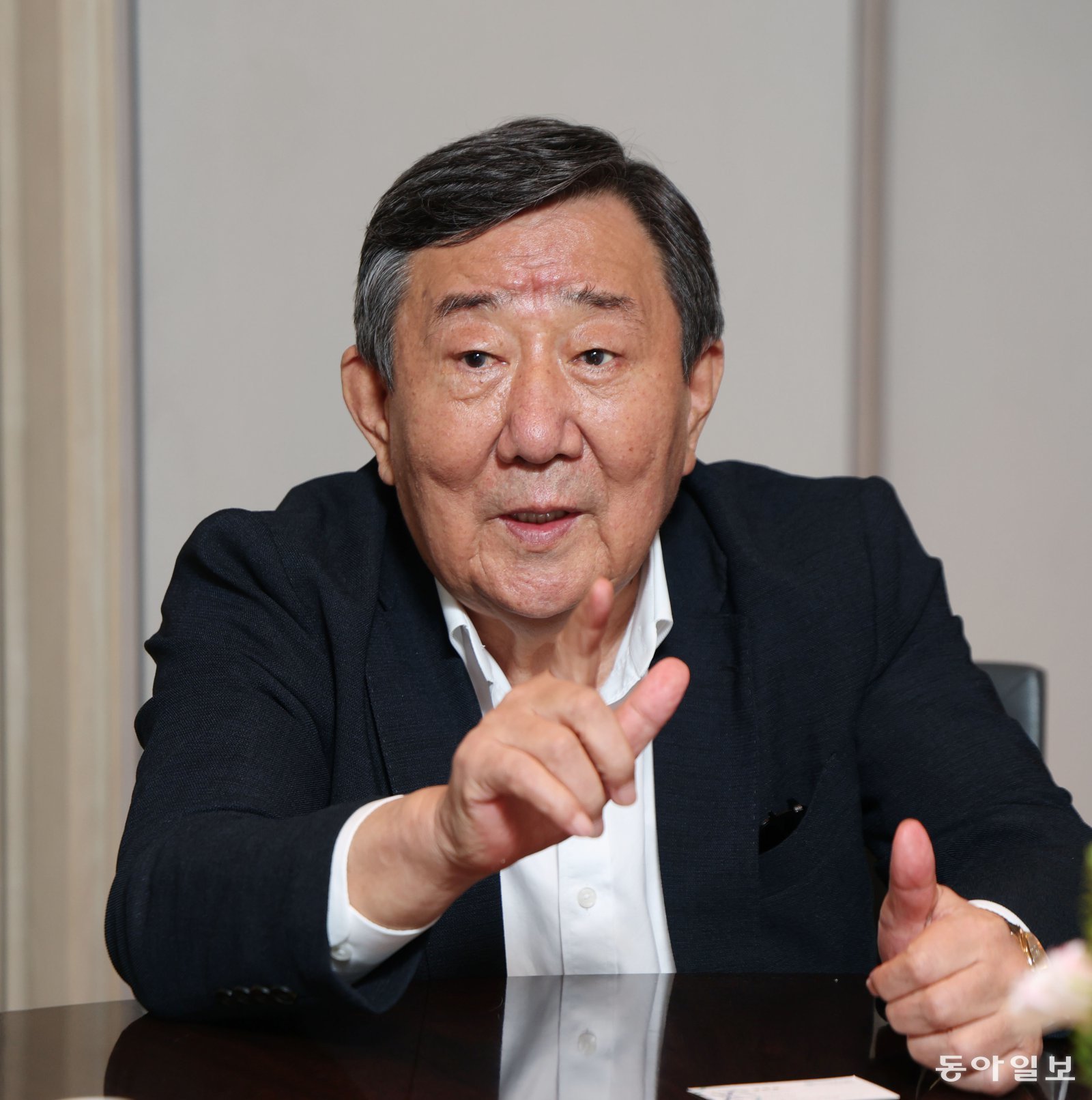
Yuriy Tskhay, 78, Chairman of Kazakhstan’s Caspian Group, who is visiting Korea, made the statement in an interview with The Dong-A Ilbo at Four Seasons Hotel Seoul in Jongno-gu, Seoul, on the 14th. Yuriy Tskhay is a leading second-generation Koryo-saram entrepreneur in Kazakhstan and previously worked as a boxing coach. He came to Korea as part of the Kazakh delegation for the first Korea-Central Asia Summit, which will be held on the 16th and 17th.
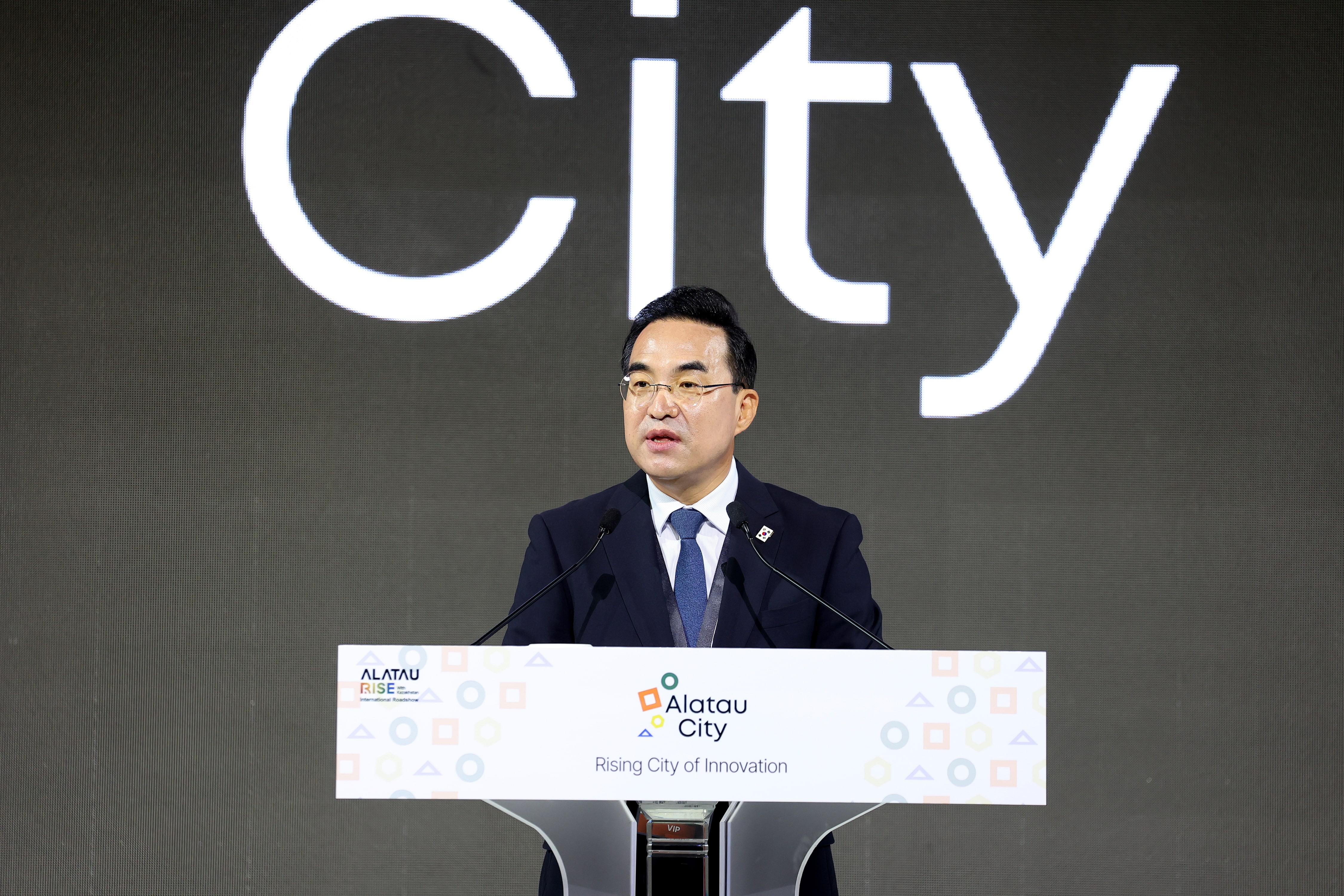
Yuriy Tskhay is leading a project to build Alatau New City near Almaty, Kazakhstan’s economic capital, covering an area approximately 1.4 times the size of Seoul. He said, “As I traveled to Singapore and Dubai in the United Arab Emirates (UAE) on business, I came to dream of ‘creating an emerging global hub city with my own hands.’”
Yuriy Tskhay, who has operated businesses in various fields, including construction and finance, sold his entire stake in Kazakhstan’s ninth-largest bank, Caspian Bank (now Kaspi Bank), in 2006 and purchased land to develop the new city. He said, “People around me strongly discouraged me, calling it a ‘reckless plan,’” but added, “I did not waver in my determination to create an advanced city for Kazakhstan’s future and for Koreans around the world.”
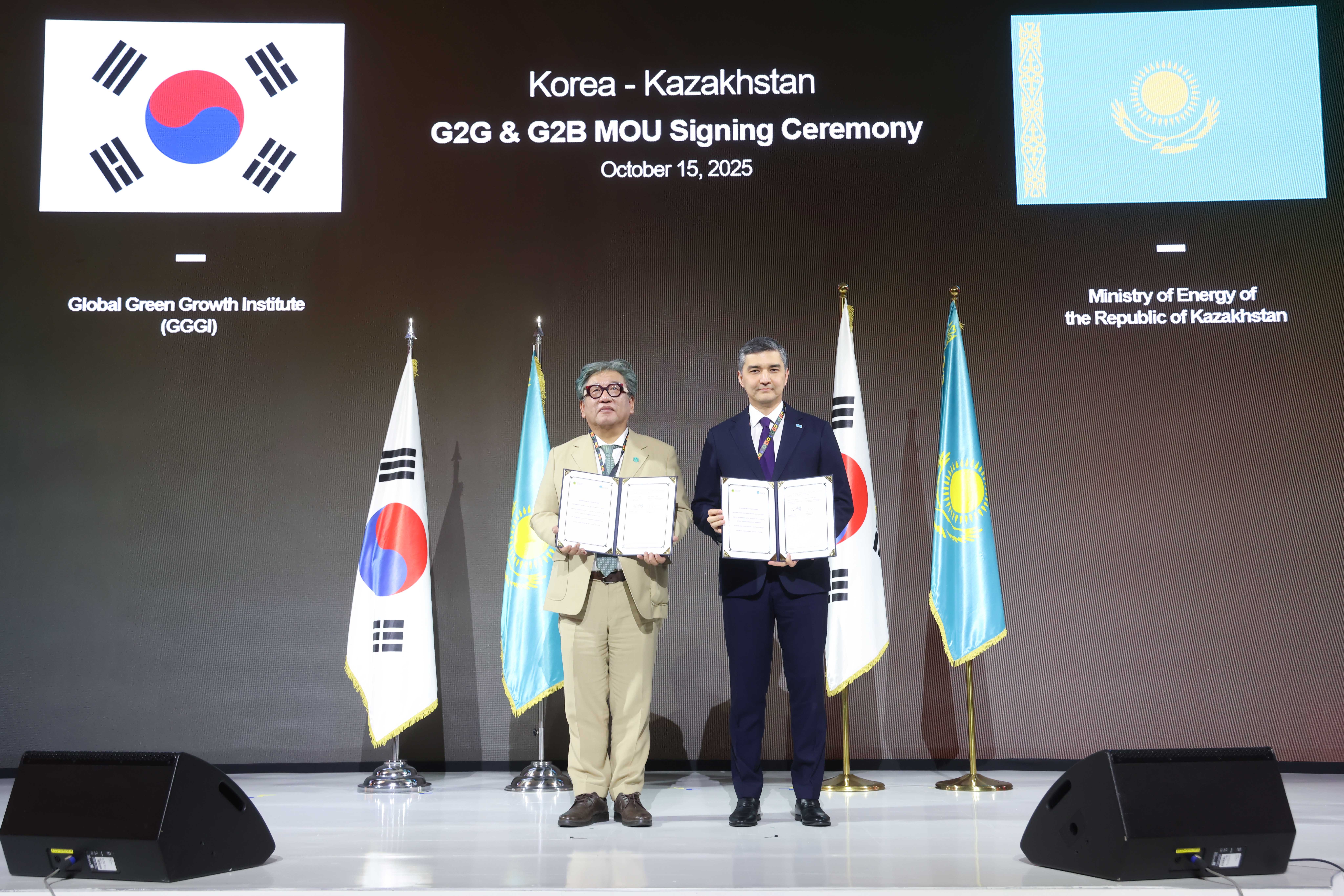
Alatau New City, a national project of Kazakhstan, is receiving support in finance, taxation and dispute resolution. As several Korean companies, including Korea Electric Power Corporation, Doosan Enerbility, Lotte Hotel & Resort and Korea Airports Corporation, are pursuing entry into Alatau New City, the Alatau New City project was also discussed at the summit between President Lee Jae-myung and President Kassym-Jomart Tokayev of Kazakhstan on the 15th.
As a child, Yuriy Tskhay was teased for being Asian and eventually took up boxing after getting into fistfights in the streets. He first set foot in his ancestral homeland in 1987. He said his visit to Korea was a turning point in his life. As a boxing coach for the Soviet national team, he said, “I and my colleagues were deeply impressed when we saw the clean streets and tall apartment buildings,” adding, “I became very proud of my identity as a Koryo-saram.”
He said, “The first- and second-richest people in Kazakhstan are both Koryo-saram, and the United States has recently also expressed great interest in Kazakhstan,” adding, “If we establish a trilateral Kazakhstan-Korea-U.S. cooperation system, we could undertake something significant.”
The following is a question-and-answer session.
– Compared with the future you imagined as a child, what kind of life are you living now?
“When I was a boy, I grew up in a very ordinary family, which could perhaps be described as poor. It was a life in which I could never even have imagined the person I am today. But after entering the sports world, I traveled around the world to compete in events, and when I first arrived in New York through John F. Kennedy International Airport in 1978, I was truly shocked. Only then did I realize that the world I had seen only in pictures, the world I could not even imagine, really existed.”
– What was your upbringing like? How did you come to pursue boxing?
“In my hometown, not only Koryo-saram but also Germans, Chechens, Caucasians and other forcibly relocated ethnic groups lived together. Because I was particularly short, I was often teased whenever I walked down the street with comments such as ‘your eyes are slanted.’ I had no choice but to become strong to survive in an environment where I would get involved in three fights a day. I had to prove with my bare fists that I was not a weak person and that I was a human being just like everyone else. After every fight, I would ask myself countless times, ‘Why am I a Koryo-saram?’”
– Was there an occasion that made you proud of being Koryo-saram?
“In 1987, I became the first among the Koryo-saram to set foot in Seoul. I went there as a boxing coach for the Soviet national team ahead of the 1988 Seoul Olympics. After arriving in Korea, my thoughts changed. I thought, ‘Ah, I am fortunate to be Koryo-saram, Korean.’ The minister who had traveled on the same flight called me over and said, ‘It was a truly beautiful and wonderful country. Even if you took off your shoes and walked around in your socks, it seemed your socks would not get dirty,’ and he took special care of me.
“At that time, on our way back through Moscow, Koreans from all over the Soviet Union gathered to hold a welcome reception. Everyone asked, ‘Tell us about Korea. Do people in Korea really wear white headbands and protest like they do on television?’ I said, ‘Not at all. Seoul is a modern city, filled with high-rise apartments, and there were so many private cars.’ I think that was when Koreans in the Soviet Union began to take pride in being Korean.”
– How did your visit to Korea change your life?
“Of course, everything changed. Even my personal thoughts and worldview changed. After visiting Korea, I was so proud of my identity as Korean that I could show it without hiding it anymore. I thought that since my historical homeland had such outstanding resources and knowledge, I should learn a lot from it. I returned with the realization that Korea was a country from which I could learn burning like a spark in my heart.”
– Kazakhstan has many successful Koryo-saram political and business leaders, including yourself.
“Koryo-saram who have built themselves up from nothing have entered all sectors of Kazakhstani society. The first- and second-richest people in Kazakhstan are both Koryo-saram. I feel tremendous pride.
“Behind their success was the help and support of the people of Kazakhstan. We also inherited good qualities from our ancestors: diligence, sincerity, responsibility and orderliness. Other ethnic groups in Kazakhstan think of Koryo-saram in the same way.
“In the past, most Koryo-saram were engaged in farming, but now things are completely different. I believe that the descendants of the third and fourth generations of Koryo-saram will come to Korea as investors. I do not think this is an unrealistic dream; I believe it will actually happen.”
– Next year will mark the 90th anniversary of the migration of Koryo-saram to Central Asia.
“Our ancestors first set foot in Kazakhstan under circumstances in which they had no choice but to endure an extremely tragic history. So I want to celebrate the 90th anniversary of settlement on a grand scale. I want to invite Koreans from around the world to Kazakhstan. I also want to express our gratitude to the people of Kazakhstan who warmly welcomed our ancestors when they migrated there. I want to honor our ancestors who endured many trials and prolonged suffering, and show the 120,000 Koryo-saram in Kazakhstan who successfully settled after going through such a difficult process. We are also pursuing the development of ‘K-Park,’ a cultural, educational and business complex that will serve as a hub for Korea-Kazakhstan cooperation within Alatau City.
“To me, Korea is our historical homeland, and Kazakhstan is my homeland. Kazakhstan gave me the opportunity to realize myself. Now my calling is to support the development of smooth and good relations between my two homelands in the economy and other fields.”
– How do you assess the future of economic exchanges between Korea and Kazakhstan?
“Koryo-saram in Kazakhstan have created a good business environment for Korean companies. I believe the positive image of Koryo-saram themselves in Kazakhstan will also help. Korean companies can stand out in energy, new city construction, artificial intelligence (AI), logistics, urban air mobility (UAM) and smart mobility fields such as robot taxis. I look forward to the entry of Korean companies with extensive experience and technological capabilities.”

Contact
yuliyakim@caspian.kr
Address
6, Gangnam Finance Center 41F, 152, Teheran-ro, Gangnam-gu, Seoul, 06236