
Date: 2026.02.12

Source: https://m.edaily.co.kr/News/Read?newsId=02217286645349864&mediaCodeNo=257
[Minji Park, Director of Caspian Korea]
“Which Park are you?”
“Its Miryang Park”
“My husband is Miryang Park too! It’s so wonderful to meet you!”
*In Korea, the family name comes from areas that were originated by their ancestors. Which makes even when they share the same surname in sound, they can come from different families.
Alexandra Tskhay, vice president of the Koryo-saram Association in Kazakhstan, embraced me with a bright smile the moment we met. Although it was our first encounter, we shared a bond through our family name. In that brief exchange, despite living far apart, we recognised that we came from the same land.
Koryo-saram did not leave their homeland by choice. During the Japanese colonial period, survival was uncertain, and the struggle for Korea’s independence demanded sacrifice. Many moved to Russia and later to Kazakhstan to engage in resistance. Today, we call them Koryo-saram.
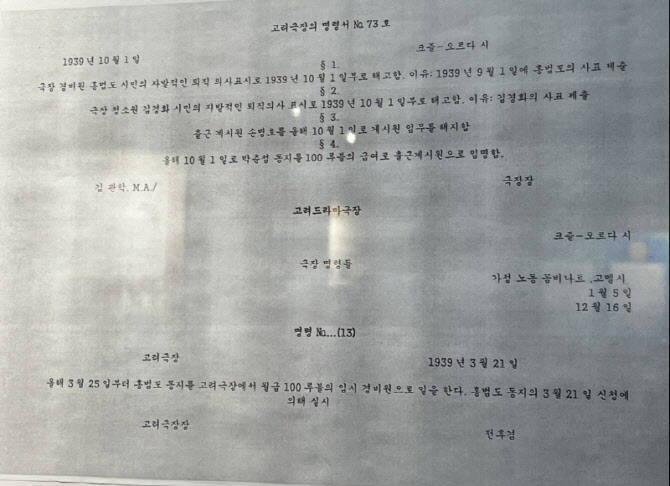
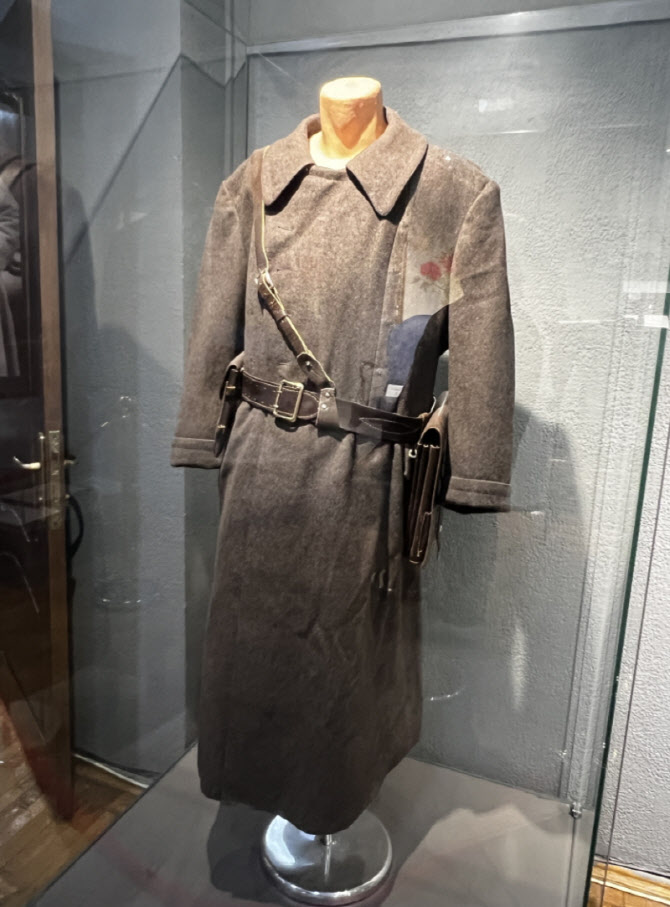
One exhibit at the Koryo Theatre stands out, prompting visitors to stop and reflect. It was a work order dated March 25, 1939, appointing “Comrade Hong Beom-do as a temporary security guard of the Koryo Theatre with a monthly salary of 100 rubles.” The final occupation of General Hong Beom-do, a revered independence fighter, was that of a guard at the Koryo Theatre in Kyzylorda.
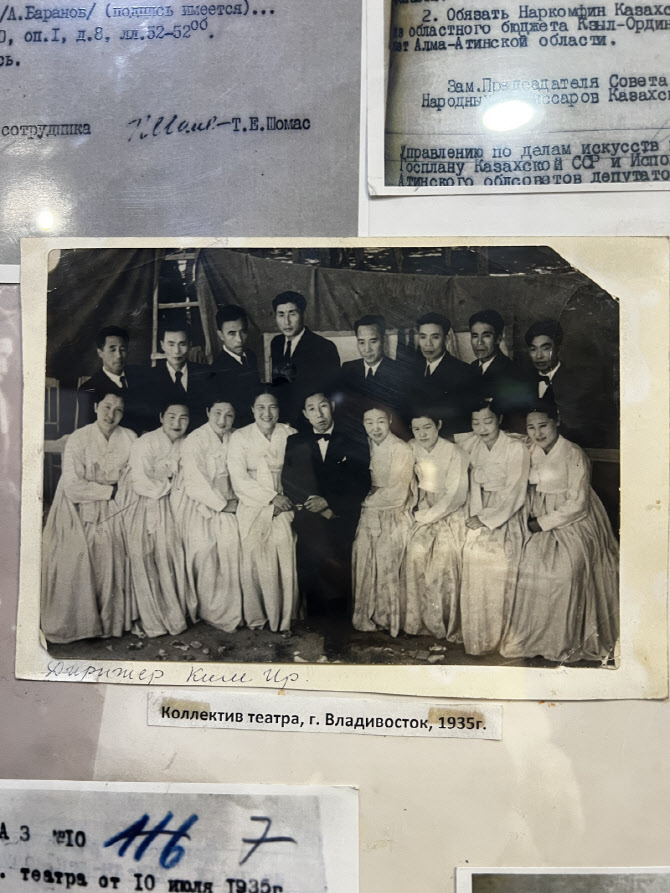
The theatre’s small exhibition space on the first floor displays his personal belongings alongside archival materials tracing the theatre’s journey from Russia to Kazakhstan. Everyday objects from the period were exhibited together with Korean scripts from the former National Koryo Theatre and administrative documents written in Russian for staging performances. These remnants of endurance, preserving our language, writing, and culture on unknown land, offer a vivid sense of how cultural identity sustained displaced people through one of the most turbulent chapters in Korean history.
Among the archival materials, there was Hong Beom-do’s immigration registration form upon entering Russia. In the section titled “Purpose and Aspiration,” only two words appear: Koryo independence. The spirit embodied by independence activists like him, forged through unwavering hope, must not be forgotten.
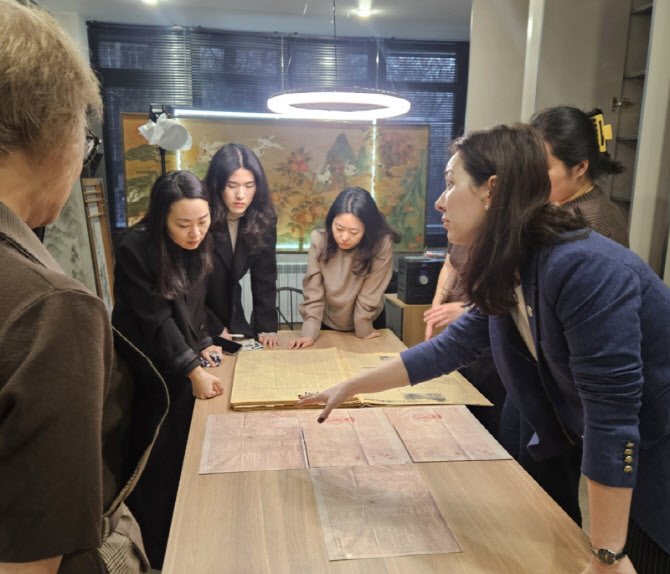
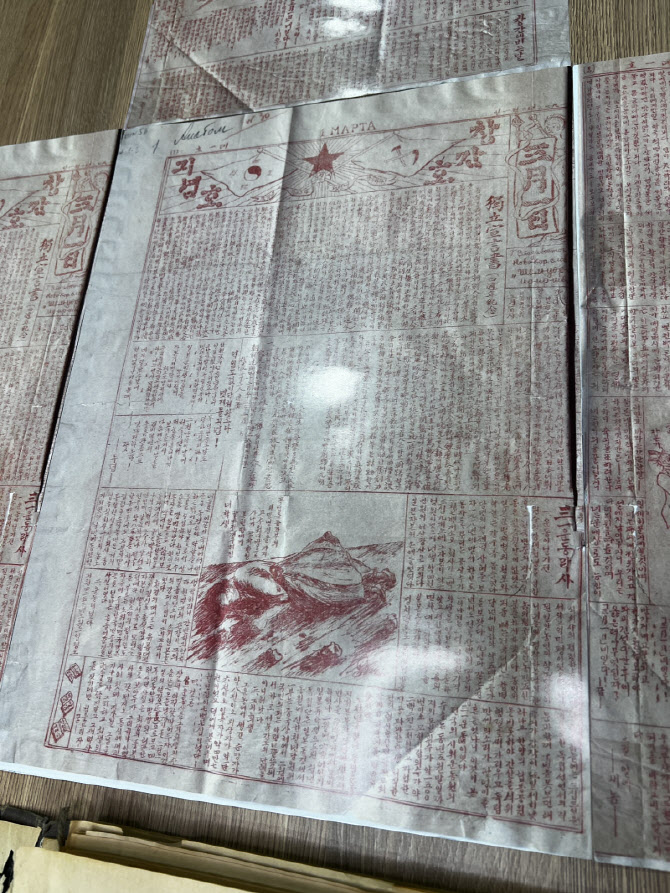
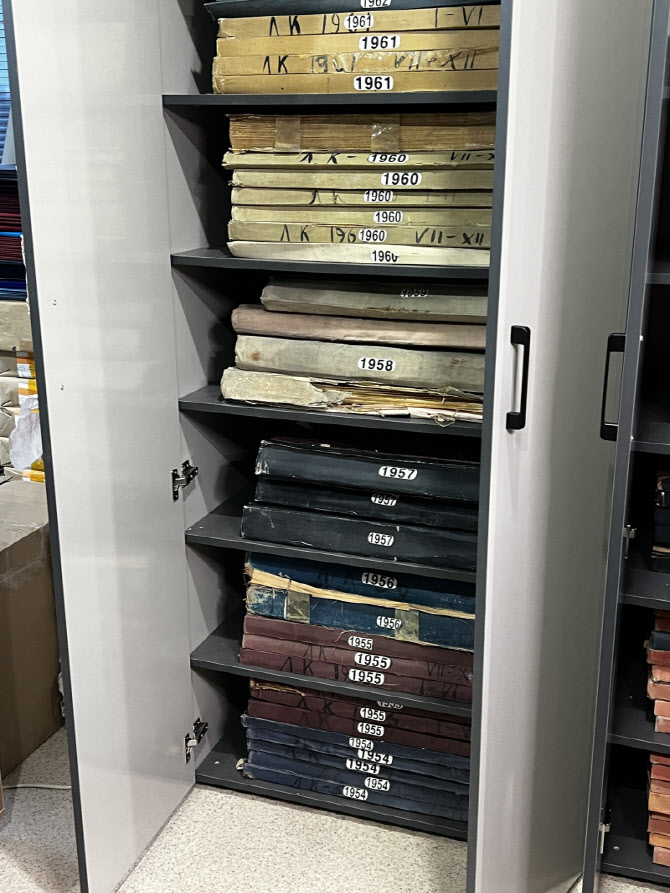
At the Koryo-saram Association, another archive came into view. Koryo Ilbo’s old papers were preserved, including a copy published on March 1, 1923, commemorating the March First Movement. Printed entirely in Hangul, carried earnest appeals for national liberation. Yet these fragile pages remain tied and stored in metal cabinets, far from what could be considered a systematic preservation environment. The restoration and conservation of Koryo Ilbo are urgent tasks. These publications are not only records of the Koryo-saram community but also integral to Korea’s modern history. It is time for the Korean government to take an active role in supporting its preservation.
In one corner, stacks of Korean textbooks were piled high. Korean-language education for Koryo-saram is essential to preserving their roots, yet a structured educational system has not been fully established. Even so, the Koryo-saram continue to safeguard Korean traditions with a devotion that often surpasses that of younger generations in Korea today. While many in Korea are gradually letting go of holiday and family-rite customs, they continue to observe traditions in the old ways, treating them as precious and enduring.
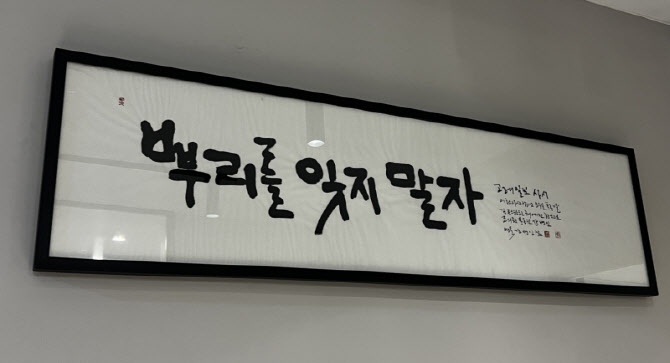
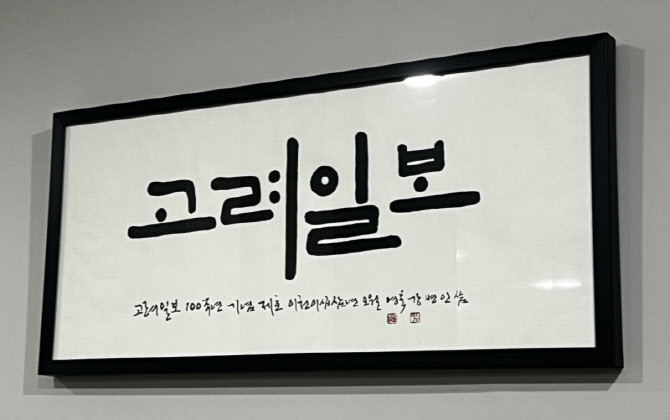
Watching this, I found myself in tears. The director of the Korean Theatre spoke quietly.
“We are grateful simply that you came from Korea and took an interest in our story.”
For a long moment, I could not respond. I felt solemn, and a deep sense of remorse followed. Next year marks the 90th anniversary of the forced displacement of Koryo-saram. Until recently, I had not given it much thought. We are only now, belatedly, turning our attention to them.
“When our ancestors left Korea, we lost our land. Now it has been restored and is recognized around the world. We cannot express how proud and happy that makes us. Here in Kazakhstan, we are not treated lightly. In fact, being known as Koryo-saram often brings us greater respect.”
They describe Korea as their ancestral and historical homeland, and Kazakhstan as the home that allowed them to survive. They said they hope Korea continues to prosper, and they offered me a blessing as well: “I hope you continue to thrive.”
I am the only Korean national working at the Korean branch of Caspian Group, founded by Koryo-saram in Kazakhstan. Working alongside them, I have come to understand the depth of spirit and affection they have inherited from their ancestors. Their sentiments are not relics of the past; they are part of a living continuum.
Koryo-saram are not a community of the past; they remain connected to Korea today. Many have emerged as economic leaders in Kazakhstan and are spearheading the development of Alatau, a new city near Almaty. At its entrance, a cultural complex “K-Park” is being established through the collective efforts of the Koryo-saram community. Conceived as an expression of gratitude to Kazakhstan for offering them refuge and as a tribute to their ancestors, the project also seeks to showcase Korean culture. Spanning approximately 10 hectares, K-Park aim to open in 2027 to mark the 90th anniversary of the forced deportation of Koreans in the Soviet Union.
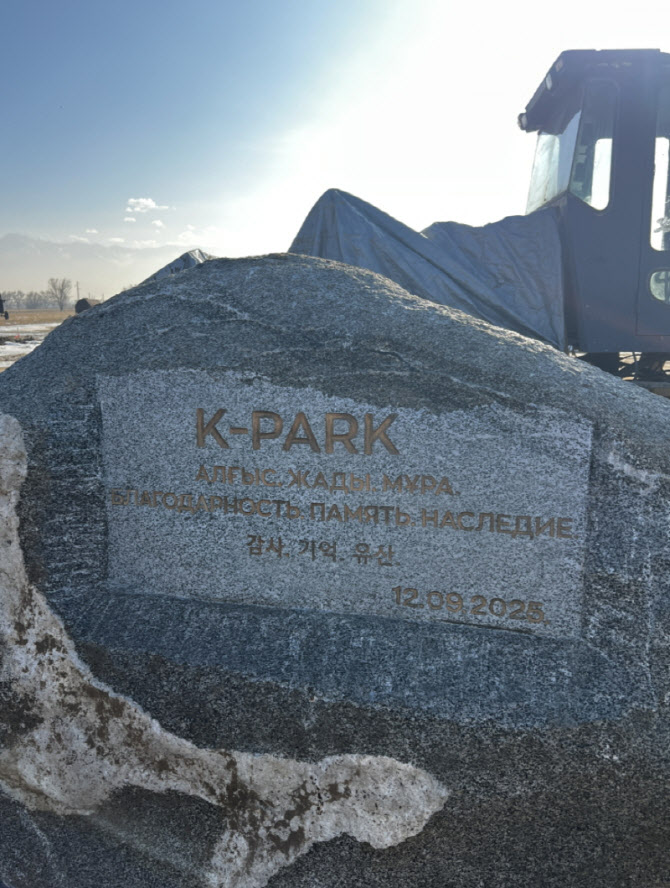
When I visited the National Museum of Korean Contemporary History, I did not come away with the impression that the independence movement of the Koryo-saram was being sufficiently highlighted. Though it is an important part of Korea’s modern and contemporary history, there were no spaces where their story was properly documented.
At the time of the controversy over the removal of General Hong Beom-do’s bust, the local Koryo-saram community felt profound disappointment. For those who had preserved the memory of the independence struggle for decades, the episode was not merely a political dispute; it felt like a denial of their history. The history of the Koryo-saram is part of Korea’s modern history. Its historical evaluation should not be obscured by the shifting colors of domestic political ideology. It is a shared history that we must remember and carry forward together.
Standing among those who had endured for decades to preserve Korean identity and culture, I found myself asking a difficult question: What, in return, have we done for them?
Today’s Korea is built, in part, upon the sacrifices of those who were forced to leave their homeland in pursuit of independence. As we live on this land and take pride in the nation’s global standing, is it not also sustained by their efforts?
For the Koryo-saram, history is not a closed chapter of the past. It remains an active part of their identity. And their hearts, even now, continue to turn toward Korea.
As the 90th anniversary of the forced deportation of the Koryo-saram approaches, this is the moment for Korea to respond.
Image Courtesy of Minji Park


대표 이메일
yuliyakim@caspian.kr
회사 주소
06236 서울시 강남구 테헤란로 152, 강남파이낸스센터 41층, 6호